Illustration — not a named farm.
05
Pour-over vs drip for Kona
Kona is a mild, sweet cup when the bag is real. That profile is easy to bury. Too hot, too coarse, a dirty machine, a blade grinder, a “bold” setting on an auto drip that just means more bitterness. The beans are not a dark-roast costume. They do not need to be punished to taste like coffee.
Pour-over and drip are both fine ways to drink 100% Kona. They are not a personality test. One gives you more control. One gives you breakfast while you find your keys. Pick based on the morning you actually have, then set the easy numbers so the cup can taste like the west side instead of like the appliance.
Brew method does not fix a bad bag. Read “100% Kona Coffee” first. A named estate second. Then pick a method. Bag literacy: How to read a Kona bag.
A boring, reliable start (1:16, ~200°F)
A widely used starting point is 1:16, one gram of coffee to sixteen grams of water, at about 200°F (93°C). That is not a secret farm recipe. It is a normal filter-coffee ratio and a normal kettle temp.
Start card
Ratio: 1:16 (one gram coffee to sixteen grams water).
Water: about 200°F (93°C).
Grind: burr, not blade. The grinder that doesn’t wreck the bag.
If you do not have a scale yet, get close by eye and get a scale when you can. Scoops lie.
Change one thing at a time.
Genuine 100% Kona on farm sites is commonly $30–$60+/lb. That is a lot of money to punish with a dirty machine or a blade.
Pour-over
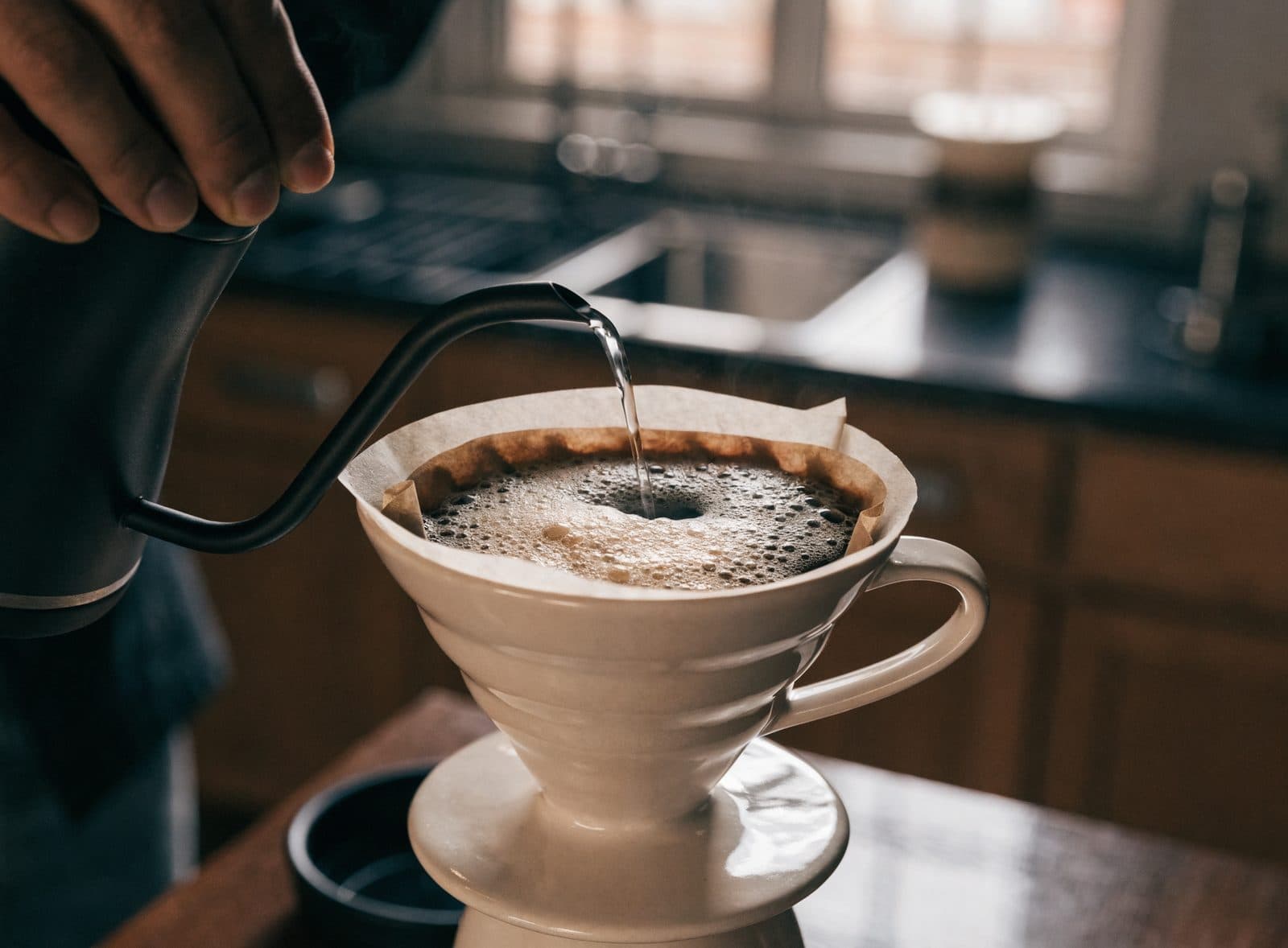
Pour-over (a cone, a flat-bottom dripper, whatever you already own) is where a sweet Kona gets to be clear. You bloom the grounds with a little water, wait for the CO2 to calm down, then pour in slow circles. The filter keeps the cup clean. Mild chocolate, nut, a little fruit, a finish that does not stick to your teeth. That is the point of spending on 100% Kona in the first place. You will notice stale beans faster this way. That is a feature. If the bag is a 10% blend, pour-over will not magically turn it into a farm lot. It will just show you the blend more honestly.
You do not need a twelve-pour choreography for this coffee.
- Wet the filter so it does not taste like paper.
- Bloom 30 seconds or so.
- Pour without drowning one side of the bed.
- Total brew time often lands around 2.5 to 4 minutes depending on grind and dripper.
Auto drip
Auto drip is the weekday machine. It can make good Kona if the machine gets hot enough, the basket is clean, and you are not using pre-ground from last month. Use the same 1:16 idea. Use a burr grind, not the dusty rubble from a blade. Fill the tank with water you would drink. If your machine has a “bold” button, know that it often just slows the water or uses more coffee without fixing extraction. Taste a normal batch first. Many cheap drippers run cool or flood the bed. If the cup tastes flat, the machine may be the weak link, not the district.
Drip machines set their own clock. Your job there is dose, grind, and cleanliness.
Paper vs metal
Paper filter vs metal is a smaller fork than people make it. Paper runs cleaner and lets a mild Kona stay mild. Metal lets more oil and fines through, so the cup feels heavier. If you like that, fine. If you bought Kona for sweetness and lift, start with paper.
Skip the theater
Skip the theater. You do not need a twelve-pour choreography for this coffee. Wet the filter so it does not taste like paper. Bloom 30 seconds or so. Pour without drowning one side of the bed. Total brew time for a pour-over often lands around 2.5 to 4 minutes depending on grind and dripper. Drip machines set their own clock. Your job there is dose, grind, and cleanliness.
If the cup is off
Change one thing at a time.
- Thin and sharp — grind a little finer, or use a bit more coffee.
- Heavy and dull — grind a little coarser, or back off the dose.
- Pour-over finishes in 90 seconds — grind finer.
- Still dripping at 6 minutes — grind coarser.
- Flat drip — the machine may run cool or flood the bed. Clean it. Descale if it has scale. Replace a torn basket filter. Then look at grind.
- Dust plus boulders in the mug — you are on a blade. Stop. Burr first.
Water
Water matters more than a second gadget. If your tap tastes like a pool, use filtered water. Kona will show chlorine as fast as it shows a good cherry. Do not overthink minerals unless you already care about that. Most people just need water that is not ugly.
If you want a bag, start with 100% Kona from a named estate, grind it right before you brew, and use 1:16 at about 200°F as the boring, reliable start. Taste the place. Adjust from the cup, not from a video that wants you to buy another toy.
Next: The grinder that doesn’t wreck the bag — burr vs blade, before you buy another kettle.
FAQ
- Is pour-over “better” than drip for Kona?
- Both are fine ways to drink 100% Kona. They are not a personality test. One gives you more control. One gives you breakfast while you find your keys. Method does not fix a bad bag.
- What ratio and temperature should I start with?
- 1:16, one gram of coffee to sixteen grams of water, at about 200°F (93°C). That is not a secret farm recipe. It is a normal filter-coffee ratio and a normal kettle temp. Change one thing at a time.
- How long should a pour-over take?
- Often around 2.5 to 4 minutes depending on grind and dripper. Bloom 30 seconds or so. If it finishes in 90 seconds, grind finer. If it is still dripping at 6 minutes, grind coarser. You do not need a twelve-pour choreography.
- Paper or metal filter?
- Paper runs cleaner and lets a mild Kona stay mild. Metal lets more oil and fines through, so the cup feels heavier. If you bought Kona for sweetness and lift, start with paper.
- Will a better method save a 10% blend?
- No. If the bag is a 10% blend, pour-over will not magically turn it into a farm lot. It will just show you the blend more honestly. Read “100% Kona Coffee” first.