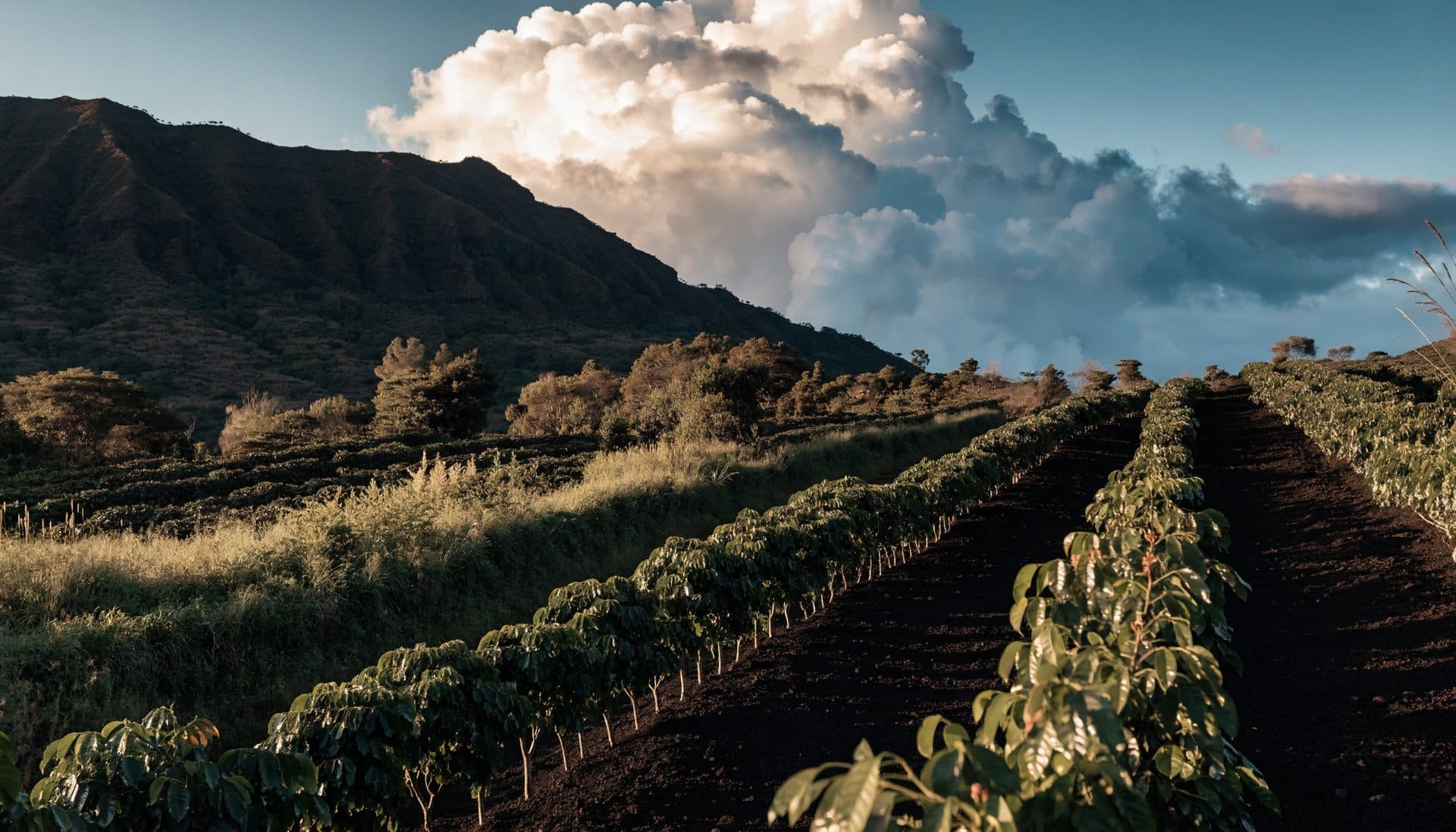
Illustration — not a named farm.
03
Kona vs the rest of Hawaiʻi
Kona is famous. It is not the only coffee in Hawaiʻi, and it is not a nickname for the whole state. If you flatten every island into one postcard, you miss good cups and you make the blend problem worse. Hawaiian is not Kona. Kona is a district on the west side of Hawaiʻi Island. Everything else needs its own name.
Kona is a district, not the whole state
Kona is famous. That fame is why gift tins borrow the word for the whole state. The district is still just the west side of Hawaiʻi Island — North Kona and South Kona, on the leeward slopes of Hualālai and Mauna Loa. Famous is not the same as everywhere. Place first: What Kona actually means.
Named origins, as themselves
Name the place you mean. The point is not a ranking. The point is origin.
- Kona — west side of Hawaiʻi Island. If you want that cup, look for “100% Kona Coffee” from a named estate.
- Kaʻū — same island, different side of the map. It is not a suburb of Kona. Farms there have spent years getting people to stop treating the south side as anonymous Big Island filler. If a bag says Kaʻū, believe the district. Taste it as Kaʻū. Do not ask it to impersonate a Holualoa lot, and do not let a blender hide Kaʻū inside a generic “Hawaiian” line so they can skip saying where it grew.
- Maui — Maui coffee is Maui coffee. If they liked the coffee on Maui, look for Maui, not a Kona souvenir.
- Kauaʻi — Kauaʻi coffee is Kauaʻi coffee.
- Other Hawaiʻi districts — they grow coffee too. Each of those places has farms, weather, and a cup that is allowed to be itself. Some lots are mild and sweet. Some are bigger or fruitier or roast darker because that is how that farm likes to show up. You do not owe Kona your loyalty just because the airport gift shop taught you one word.
100% Maui or 100% Kaʻū is a real origin claim for that place, not a failed Kona claim.
Hawaiian blend is a blend
What you do owe yourself is a label that tells the truth. A Hawaiian blend is a blend. It might include Kona. It might include none. It might be 10% of one Hawaiʻi name and a lot of coffee from somewhere else entirely. Until 30 June 2027, a blend can use a Hawaiʻi geographic name with as little as 10% of that origin (HRS §486-120.6 / Act 198). From 1 July 2027, using the name means at least 51% by weight from that origin. Percentage disclosure is already required.
So if the bag says Hawaiian coffee blend, read the second line.
- If it says 10% Kona coffee blend, you already know the rest of the bag is not Kona. Nine tenths did not grow in Kona.
- If it says 100% Maui or 100% Kaʻū, that is a real origin claim for that place, not a failed Kona claim.
- If it does not name a place and a percent, you are shopping the postcard.
People mix this up because tourism mixed it up first. Resort menus, gift tins, and “Hawaii blend” grocery bags trained mainland palates to hear Kona whenever they hear Hawaiʻi. That is convenient for anyone selling a cheap blend. It is rude to the farms that are not in the Kona district. It is also how you go home with a bag that tastes like nowhere. If you loved a cup at a hotel or a south-shore cafe, ask what was in it. A lot of “Hawaii coffee” on a menu is a blend, another island, or a roast name borrowed for the postcard.
Taste without the hierarchy
Taste without the hierarchy. A small protocol, same kitchen:
- Brew a 100% Kona and a 100% Kaʻū a few days apart.
- Same grinder, same ratio. A widely used start is 1:16 at about 200°F (93°C).
- Notice sweetness, body, finish.
- Do it again with Maui or Kauaʻi if that is what you can get as a single origin.
You might prefer Kona. You might not. Both answers are allowed. What is not allowed, if we are being honest, is calling the winner “the Hawaiian one” and the rest a footnote.
Gifts, on purpose
If you are buying a gift, pick the origin on purpose.
- “They like Kona” means 100% Kona Coffee from a named estate, not a Hawaiian blend with a hula dancer on the front.
- “They liked the coffee on Maui” means look for Maui, not a Kona souvenir.
- “They just want Hawaiʻi coffee” is a fair brief. Then say Hawaiian blend out loud, or pick one island and put that name on the card.
A bag with a farm name on it is a complete present. Do not gift a club unless you know they want one.
Price still talks. Genuine 100% Kona on farm sites commonly lands in the $30–$60+/lb range people see when they buy direct. Other Hawaiʻi single origins are not automatically cheap, and they are not automatically Kona-priced either. Use price as a tell for the word on the bag, not as a scoreboard between islands.
Island Coffee Bar is the Hawaii coffee guide — real Kona, a better brew, no 10% blend. Real Kona includes a second half: real Kaʻū, real Maui, real Kauaʻi, named as themselves. If you want a bag of Kona, start with 100% Kona from a named estate. If you want the rest of Hawaiʻi, ask for those names too. The islands are not a flavor. They are places.
Next: How to read a Kona bag if you are buying Kona, or Farm-direct vs the supermarket bag if the tin is already in the cart.
FAQ
- Is Hawaiian coffee the same as Kona?
- No. Hawaiian is not Kona. Kona is a district on the west side of Hawaiʻi Island. Everything else needs its own name.
- Is Kaʻū a kind of Kona?
- No. Kaʻū grows coffee on the same island, on a different side of the map. It is not a suburb of Kona. If a bag says Kaʻū, believe the district. Taste it as Kaʻū.
- What about Maui and Kauaʻi?
- Maui coffee is Maui coffee. Kauaʻi coffee is Kauaʻi coffee. Other Hawaiʻi districts grow coffee too. The point is not a ranking. The point is origin. 100% Maui or 100% Kaʻū is a real origin claim for that place, not a failed Kona claim.
- What is a Hawaiian blend?
- A blend. It might include Kona. It might include none. It might be 10% of one Hawaiʻi name and a lot of coffee from somewhere else. Until 30 June 2027 a blend can use a Hawaiʻi geographic name with as little as 10% of that origin (HRS §486-120.6 / Act 198). From 1 July 2027, using the name means at least 51% from that origin.
- If they asked for Kona, can I gift a Hawaiian blend?
- “They like Kona” means 100% Kona Coffee from a named estate, not a Hawaiian blend with a hula dancer on the front. “They just want Hawaiʻi coffee” is a fair brief — then say Hawaiian blend out loud, or pick one island and put that name on the card.