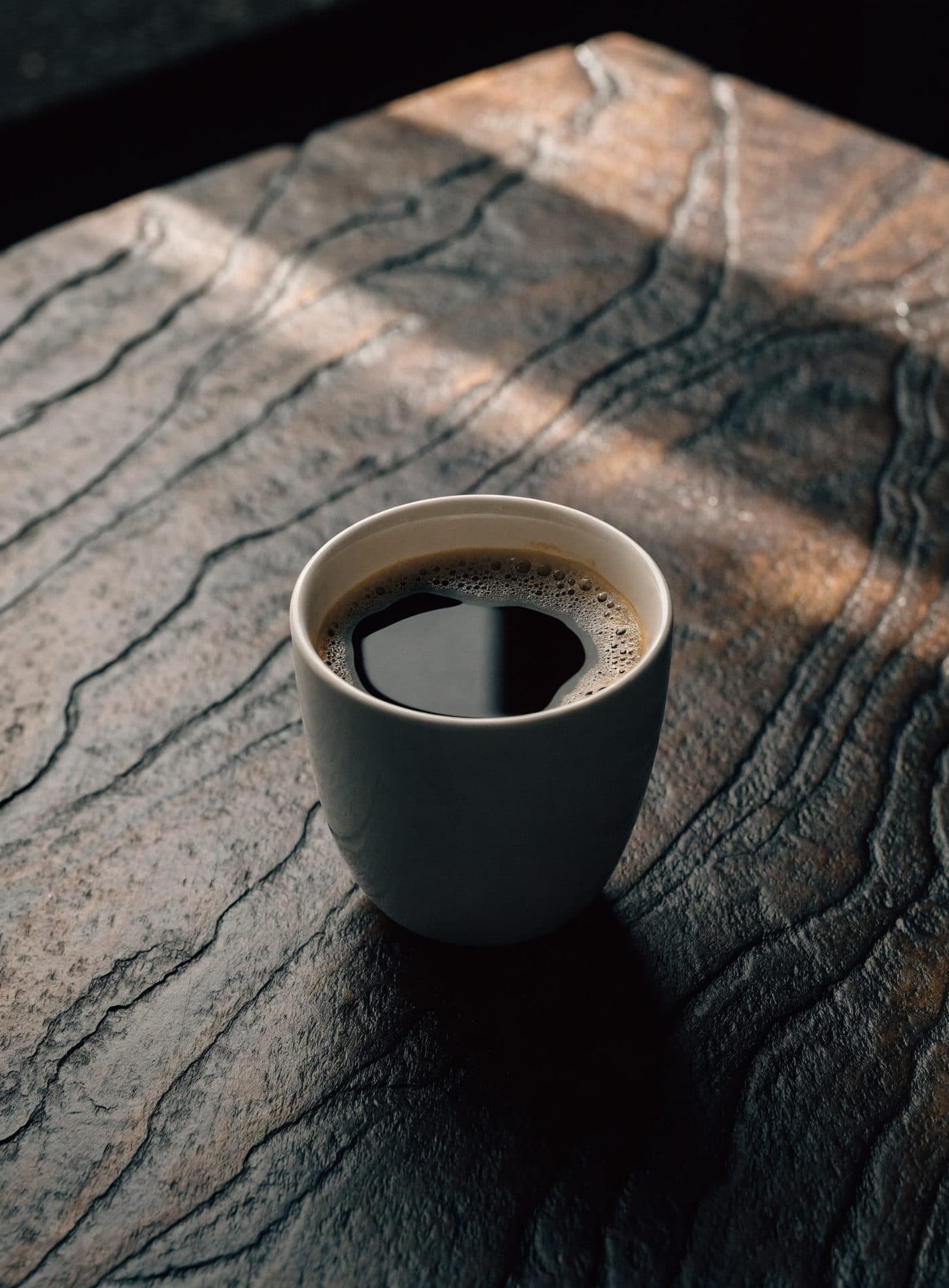
Illustration — not a named farm.
About Island Coffee Bar
Island Coffee Bar is the Hawaii coffee guide — real Kona, a better brew, no 10% blend.
Who this is for
We write for people who had a good cup in Hawaiʻi and want that cup again, not a souvenir blend. Mainland drinkers, locals who already know the difference, home brewers who will spend on beans if they are not getting played, gift buyers who do not want to mail a 10% bag.
The job
The job is simple. Help you read a label, pick 100% Kona from a named estate when that is what you want, and brew it without wrecking it.
- Read a label. Identity line first: “100% Kona Coffee.” Then a farm you can name, a roast date, then price. Grade words do not rescue a blend. Walkthrough: How to read a Kona bag.
- Pick 100% Kona from a named estate when that is the cup you want. Until 30 June 2027 a blend can use a Hawaiʻi geographic name with as little as 10% of that origin (HRS §486-120.6 / Act 198). From 1 July 2027 the floor is 51% if the name is used. The clean move is still those four tokens. Flagship: 100% Kona vs the blend.
- Brew it without wrecking it. A burr grind, then 1:16 at about 200°F (93°C) as the boring start. Pour-over vs drip for Kona and The grinder that doesn’t wreck the bag.
If you are buying a gift, pick the origin on purpose. A bag with a farm name on it is a complete present. Do not gift a club unless you know they want one.
Start here is the eight guides in reading order, from the homepage.
Who publishes this
Jay Miller writes and operates Island Coffee Bar out of Hawaiʻi. He drinks the coffee.
Name collisions stay in the footer, once.
Why the word still does too much work
Why bother. Because the word Kona still does more work on a bag than the beans often do. Until 30 June 2027, a blend can legally wear a Hawaiʻi geographic name with as little as 10% of that origin in the bag (HRS §486-120.6 / Act 198). From 1 July 2027 the floor rises to 51% if that name is used. Blend percentage already has to be disclosed. The clean move is still the same: look for the words “100% Kona Coffee.” We will keep saying that until it is boring.
Genuine 100% Kona on farm sites commonly sits in the $30–$60+/lb range people see when they shop direct. A cheap “Kona” is usually a blend. That range is a smell test, not a certified floor.
Other islands are real coffee
Other islands grow real coffee too. Kaʻū, Maui, Kauaʻi, and the rest of Hawaiʻi are not consolation prizes. They are just not Kona. Hawaiian is not a synonym for Kona. We will not flatten those origins to make a slogan. More: Kona vs the rest of Hawaiʻi.
We may earn a commission if you buy through links we add later. Nothing is enrolled yet. When links go up, they will sit next to the same advice we would give a friend: start with 100% Kona from a farm you can name, grind it on a burr, and taste the place instead of the marketing. Details: affiliate disclosure.
If a page feels like a pitch, we missed. Lead with the cup. The bag comes after.
Next: What Kona actually means, then 100% Kona vs the blend.
FAQ
- Who writes Island Coffee Bar?
- Jay Miller writes and operates it out of Hawaiʻi. He drinks the coffee.
- What is the job of this site?
- Help you read a label, pick 100% Kona from a named estate when that is what you want, and brew it without wrecking it. Lead with the cup. The bag comes after.
- Do you make money from coffee links?
- We may earn a commission if you buy through links we add later. Nothing is enrolled yet. Details live on the affiliate disclosure.
- Why keep saying “100% Kona Coffee”?
- Until 30 June 2027 a blend can use a Hawaiʻi geographic name with as little as 10% of that origin (HRS §486-120.6 / Act 198). From 1 July 2027 the floor is 51% if the name is used. The clean move is still those four tokens: 100% Kona Coffee.